






Where are stainless steel round-head drill bit self-tapping screws mainly used?
If you have ever struggled with pre-drilling holes before fastening metal panels, you know how much time and effort it can waste on a construction site. Stainless steel round head self-drilling screws eliminate that extra step, letting you drill, tap, and fasten in a single motion. If you are new to these fasteners, you probably have two important questions. First, will a self-drilling screw actually penetrate the materials I am working with — like thick steel or aluminum — without breaking or stripping? Second, how do I choose between different stainless steel grades like 304 and 410, and what size do I need for my specific application? These are smart questions, and we are here to give you clear, practical answers. In this guide, we will explore the primary applications of stainless steel round-head self-drilling screws across corrugated steel roofing, steel structures, curtain walls, and photovoltaic mounting systems. We will explain the critical differences between SUS410 and 304 stainless steel, cover key specifications like the common 4.8×25 mm size, and provide a detailed comparison table to help you select the right fastener. By the time you finish reading, you will understand exactly where and how to use these versatile screws in your projects.
What is a stainless steel round-head self-drilling screw?
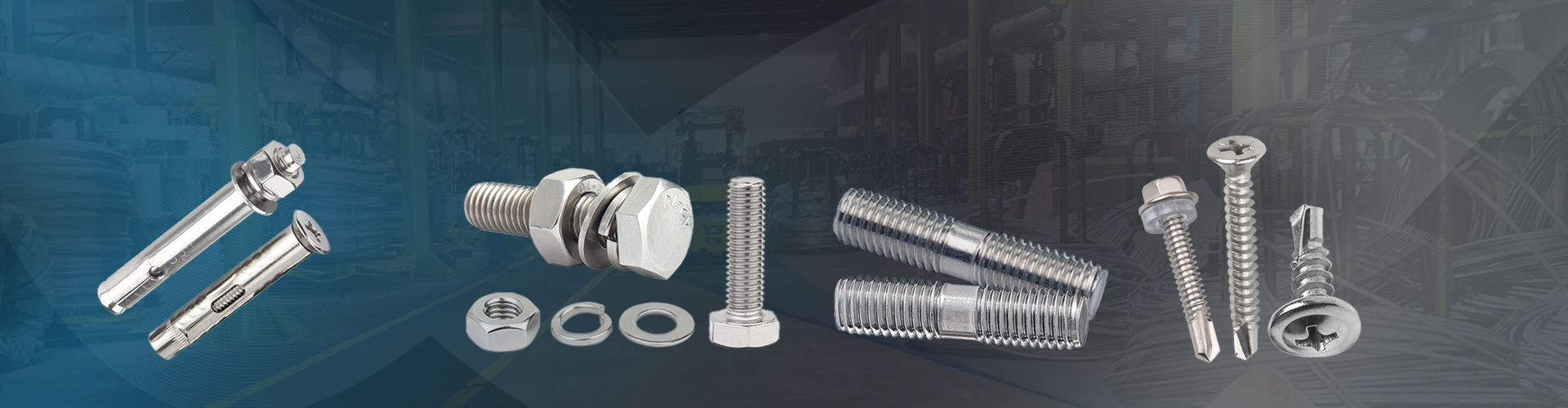
A stainless steel round-head self-drilling screw — also commonly called a Tek screw or drill tail screw — is a fastener that combines a drill bit, a tap, and a screw into one integrated component. Unlike traditional screws that require a pre-drilled pilot hole, the self-drilling point of this screw can cut through sheet metal, steel, aluminum, and other materials on its own. The round head provides a low-profile, dome-shaped finish that sits securely against the surface.
The screw is available in various stainless steel grades. SUS410 is a martensitic stainless steel that can be heat-treated to achieve high hardness — over HRC 50 — making it excellent for drilling through tougher substrates. 304 stainless steel is an austenitic grade that offers superior corrosion resistance and is ideal for outdoor and moist environments, but it cannot be heat-treated and has lower hardness. Some manufacturers also offer bi-metal designs where the drill tip is made of hardened SUS410 and the head and shank are made of 304 or 316 stainless steel, combining drilling performance with corrosion resistance. Common standards for these screws include DIN 7504 and ISO 15481.
Key applications of stainless steel round-head self-drilling screws

Corrugated steel roofing sheets
One of the most common applications for stainless steel round-head self-drilling screws is fastening corrugated steel roofing sheets. These screws are used to attach metal roofing panels to steel purlins, wood rafters, or metal substructures. The self-drilling point eliminates the need for pre-drilling, significantly reducing installation time on large roofing projects.
For roofing applications, these screws are often paired with EPDM sealing washers that provide a watertight seal, preventing leaks around the fastener penetration. The round head offers a clean, finished appearance that sits flush against the roof panel. Common sizes for roofing include the widely used stainless steel round head self-drilling screw 4.8*25 (M4.8×25 mm), as well as other diameters like ST4.2, ST5.5, and ST6.3. In coastal or highly corrosive environments, 304 or 316 stainless steel is recommended for superior rust resistance.
Steel structures and metal framing
In steel structure construction, stainless steel round-head self-drilling screws are used to connect light gauge steel framing, attach accessories to steel framing, and secure roof decking to steel members. They are particularly valuable for fastening metal sheets to steel substructures in applications ranging from industrial buildings to residential metal framing.
Bi-metal self-drilling screws are especially well-suited for steel structure applications. These fasteners feature a drill tip made of hardened alloy steel or SUS410 that can penetrate steel up to 6 mm thick or more, while the head and shank are made of 304 stainless steel for corrosion resistance. The tensile strength of high-quality stainless steel self-drilling screws can exceed 700 MPa (A2-70 grade) or even 800 MPa (A4-80 grade). This combination of drilling capability and structural strength makes them indispensable in modern steel construction.
Curtain walls and building envelopes
Curtain wall systems and building envelope applications demand fasteners that can handle dissimilar metal connections while resisting corrosion. Stainless steel round-head self-drilling screws are the preferred choice for attaching curtain wall framing, metal cladding, and facade panels to the building structure.
The corrosion resistance of stainless steel is particularly important in curtain wall applications, where fasteners may be exposed to weathering and moisture over decades of service. Bi-metal designs with 304 or 316 stainless steel bodies and hardened drill tips offer the ideal balance: excellent penetration through aluminum extrusions and steel framing, combined with long-term corrosion protection. Studies have shown that using stainless steel fasteners with matching materials can reduce galvanic corrosion rates by over 95% compared to carbon steel alternatives.
Photovoltaic (solar) mounting systems
The growing solar energy industry has become a major user of stainless steel round-head self-drilling screws. These fasteners are used to attach photovoltaic mounting brackets, rails, and L-feet to metal roofs and steel substructures. In photovoltaic applications, the self-drilling feature allows installers to work quickly and efficiently without pre-drilling, which is especially valuable when installing hundreds of mounting points on a single solar array.
For solar applications in extreme environments — such as desert or coastal areas — manufacturers offer screws with a "304 stainless steel + 410 drill tip" construction that has passed 1,500-hour salt spray tests without corrosion. The screws are typically installed at a 90-degree angle to the roof surface for optimal holding strength. Common sizes for photovoltaic mounting include M6 to M8 stainless steel self-drilling screws with drill tip lengths of at least 12 mm. Some products, like the EJOT Solar Fastener, have even received approval from the German Institute for Construction Technology (DIBt) for fixing photovoltaic installations to trapezoidal steel profiles and sandwich panel roofs.
Material comparison table: SUS410 vs 304 stainless steel
|
Feature |
SUS410 Stainless Steel |
304 Stainless Steel (A2) |
Bi-Metal (410 Tip + 304 Body) |
|---|---|---|---|
|
Corrosion Resistance |
Moderate — better than carbon steel, lower than 304 |
Excellent — ideal for outdoor and moist environments |
Excellent — 304 body provides corrosion protection |
|
Hardness |
High — can be heat-treated to >HRC 50 |
Lower — cannot be heat-treated |
High drill tip + corrosion-resistant body |
|
Drilling Capacity |
Excellent — can drill through thick steel plates |
Limited — best for aluminum, wood, plastic sheets |
Excellent — hardened tip penetrates tough substrates |
|
Tensile Strength |
High (heat-treated) |
A2-70: ≥700 MPa |
A2-70 or A4-80: ≥700–800 MPa |
|
Best Applications |
Steel structures, heavy-gauge metal |
Roofing, outdoor, marine, photovoltaic |
Curtain walls, steel structures, demanding applications |
|
Relative Cost |
Moderate |
Moderate-High |
Higher |
|
Common Standards |
DIN 7504, ISO 15481 |
DIN 7504, ISO 15481 |
DIN 7504, ISO 15481 |
How to select the right stainless steel round-head self-drilling screw
When sourcing stainless steel round-head self-drilling screws from a stainless steel round head self-drilling screw manufacturer or stainless steel self-drilling screw manufacturer, consider these key factors:
Material selection. Choose SUS410 for applications requiring maximum drilling performance into thick steel. Choose 304 stainless steel for superior corrosion resistance in outdoor, coastal, or chemical environments. For the best of both worlds, consider bi-metal screws with a 410 drill tip and 304 or 316 body.
Size and length. The stainless steel round head self-drilling screw 4.8*25 (M4.8×25 mm) is one of the most common sizes for general metal fastening. Other available diameters include ST3.5, ST3.9, ST4.2, ST5.5, and ST6.3, with lengths ranging from 13 mm to 100 mm or more.
Drill point type. Different drill point types (e.g., SD2, SD3, SD5) are designed for different material thicknesses. A #2 drill point handles up to about 2.7 mm of steel, while #5 can handle substrates exceeding 3.0 mm.
Head style and drive. Round head screws typically feature a Phillips cross recess for easy installation with standard screwdrivers or power tools. Some applications may prefer pan head, hex washer head, or truss head styles depending on the bearing surface and torque requirements.
Corrosion protection. For demanding environments, look for passivated screws that have passed 500+ hours of salt spray testing per ASTM B117. Passivation treatment makes the chromium oxide protective film more dense and uniform, significantly enhancing corrosion resistance.
Contact Us
Not sure which stainless steel round head self-drilling screw is right for your roofing, steel structure, curtain wall, or photovoltaic project? Our team works with leading stainless steel round head self-drilling screw manufacturers and stainless steel self-drilling screw manufacturers to source high-quality fasteners for every application. Whether you need stainless steel self-drilling screw wholesale pricing, specifications for SUS410 stainless steel self-drilling screws, or assistance with custom sizes, we are here to help. Reach out today for a consultation or a quote tailored to your needs.
FAQ
Q1: What is the difference between SUS410 and 304 stainless steel self-drilling screws?
SUS410 is a martensitic stainless steel that can be heat-treated to achieve high hardness (over HRC 50), making it excellent for drilling through thick steel plates. However, its corrosion resistance is lower than 304. 304 stainless steel is an austenitic grade that offers superior corrosion resistance, ideal for outdoor and moist environments, but it cannot be heat-treated and has lower hardness. For the best of both worlds, consider bi-metal screws with a 410 drill tip and 304 or 316 body.
Q2: What size stainless steel round-head self-drilling screw is most commonly used?
The stainless steel round head self-drilling screw 4.8*25 (M4.8×25 mm) is one of the most widely used sizes for general metal fastening applications. Other common diameters include ST3.5, ST3.9, ST4.2, ST5.5, and ST6.3, with lengths ranging from 13 mm to 100 mm or more. The right size depends on your specific material thickness and application requirements.
Q3: Can stainless steel self-drilling screws be used in photovoltaic (solar) mounting systems?
Yes, stainless steel self-drilling screws are widely used in photovoltaic mounting systems to attach brackets, rails, and L-feet to metal roofs and steel substructures. For extreme environments like desert or coastal areas, manufacturers offer screws with "304 stainless steel + 410 drill tip" construction that has passed 1,500-hour salt spray tests without corrosion. Some products, like the EJOT Solar Fastener, are approved by the German Institute for Construction Technology (DIBt) for fixing photovoltaic installations to trapezoidal steel profiles and sandwich panel roofs.