


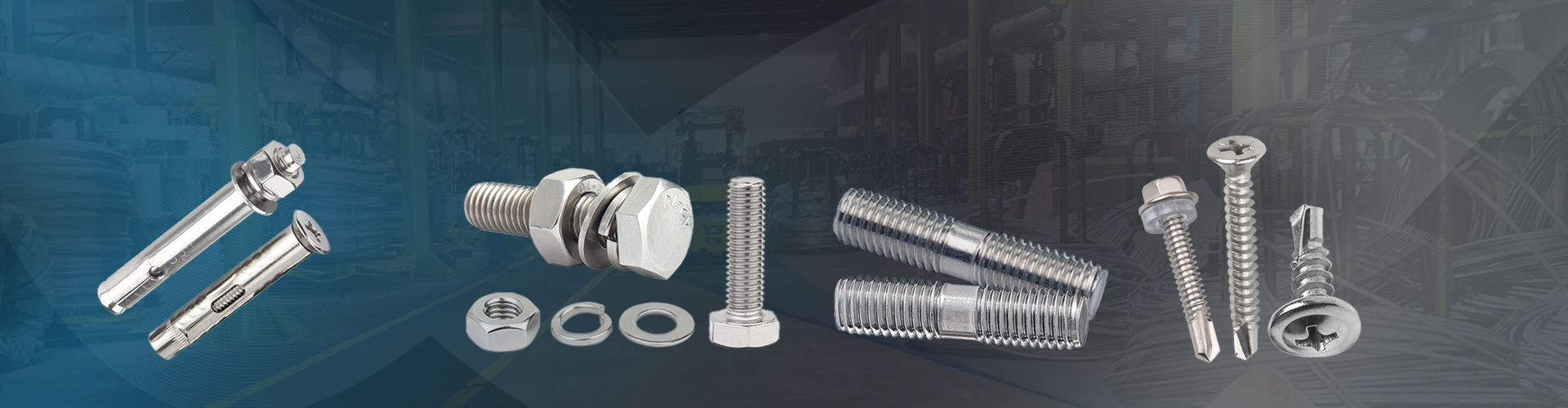
- Stainless Steel Bolt
- Carbon Steel Bolts
- Anchor Bolts
-
Tapping Screw
- Countersunk Tapping Screw
- Pan Head Tapping Screw
- Countersunk Head Drill
- Pan Head Drill Screw
- Hexagonal Drill Screw
- Button Head Washer Drill
- Flat Head Hex Socket Drill
- Modified Truss Head Self
- Hex Washer Head Self
- Countersunk head self-drilling screws
- Pan head self-drilling
- Drywall Screws
- Phillips truss head self tapping screws
- Carbon steel Cross pan head self tapping screws
- Carbon steel Cross countersunk head self tapping screws
- Machine Screw
- Studs
- Pins
- Stainless Steel Chain
-
Nuts
- Stainless Hexagonal Nut
- Stainless Thickened Nut
- Stainless Hexagon Thin Nut
- Stainless Steel Flange Nut
- Stainless Steel T Slot Nut
- Stainless Steel Cap Nut
- Stainless Square Weld Nut
- Stainless Steel Square Nut
- Stainless Steel Round Nut
- Stainless Steel K Nut
- Stainless Nylon Lock Nut
- Stainless Steel Spring Nut
- Stainless Steel Slotted Nut
- Stainless Steel Cage Nut
- Stainless Butterfly Nut
- Stainless Steel Extension
- Stainless Steel Rivet Nut
- Stainless Steel Jack Nut
- Sliding T Slot Nuts
- Carbon Steel Hexagonal
- Carbon Steel Cap Nuts
- Carbon Steel Square Weld
- Carbon Steel Slotted Round
- Carbon Steel Hexagon Thin
- Carbon Steel Hexagonal Nuts
- Washers
- Rigging Type Screws
- Other Bolts


304 Stainless Steel CLS Self-Clinching Nut For Sheet Metal
product detail
Description of Stainless Steel Self-Clinching Nuts
Stainless steel self-clinching nuts, also known as self-locking nuts, rivet nuts, or knurled nuts, are round fasteners with knurled teeth and guide grooves at one end, specifically designed for thin sheets or sheet metal parts. They are installed using a press-fit process—the nut is placed into a pre-drilled hole in the sheet metal, and parallel compressive force is applied, causing the sheet metal around the nut to cold deform and flow into the guide groove, thus making the fastener an integral part of the mounting plate.
PEM stainless steel self-clinching nuts are the most widely recognized brand product line in the industry.
Our CLS stainless steel self-clinching nuts are made of 300 series stainless steel (AISI 300), with a hardness higher than the mounting plate, ensuring reliable deformation and a secure lock during the press-fit process. CLS/CLSS stainless steel self-clinching nuts are recommended for steel or aluminum plates with a hardness of HRB 70 or below (HB 125 or below).
Both 304 stainless steel self-clinching nuts and 316 stainless steel press-fit nuts are made of 300 series stainless steel, with a passivated surface treatment (compliant with ASTM A380 standard), providing excellent corrosion resistance. The product range covers the full metric (M2~M12) and US (4#~1/2) sizes. As a professional manufacturer and supplier of stainless steel self-clinching nuts, we offer a complete range of nut specifications and support custom-made non-standard stainless steel press-fit nuts. Our direct-supply model makes our stainless steel press-fit nuts more competitively priced.
Advantages of Stainless Steel Self-Clinching Nuts
Press-fit fixing: the preferred solution for thin plate connections
Stainless steel self-clinching nuts are designed to solve the problems of thin plates that cannot be directly tapped or are prone to deformation when welded. The nuts are permanently fixed to the plate using a press-fit process, forming a strong and reliable internal thread. No welding or tapping is required; installation is completed in a single press.
Completely flush back of the plate, clean appearance
After installation, the back of the plate remains completely flush, without any protrusions or burrs. This feature is particularly suitable for precision equipment, electronic instruments, and communication cabinets where strict flatness requirements are placed.
Easy installation, simple press-fit
The installation process is simple and efficient—simply place the nut into the pre-drilled hole in the plate and apply pressure using a hydraulic riveting machine or manual riveting tool. No complex processes or additional materials are required, significantly improving assembly efficiency.
Superior material, excellent corrosion resistance
Made of 300 series stainless steel (304 or 316), with a passivated surface treatment, providing excellent corrosion resistance and oxidation resistance. 316 stainless steel self-clinching nuts contain molybdenum, making them more resistant to chloride corrosion and particularly suitable for marine environments, chemical equipment, and high-salt-spray conditions.
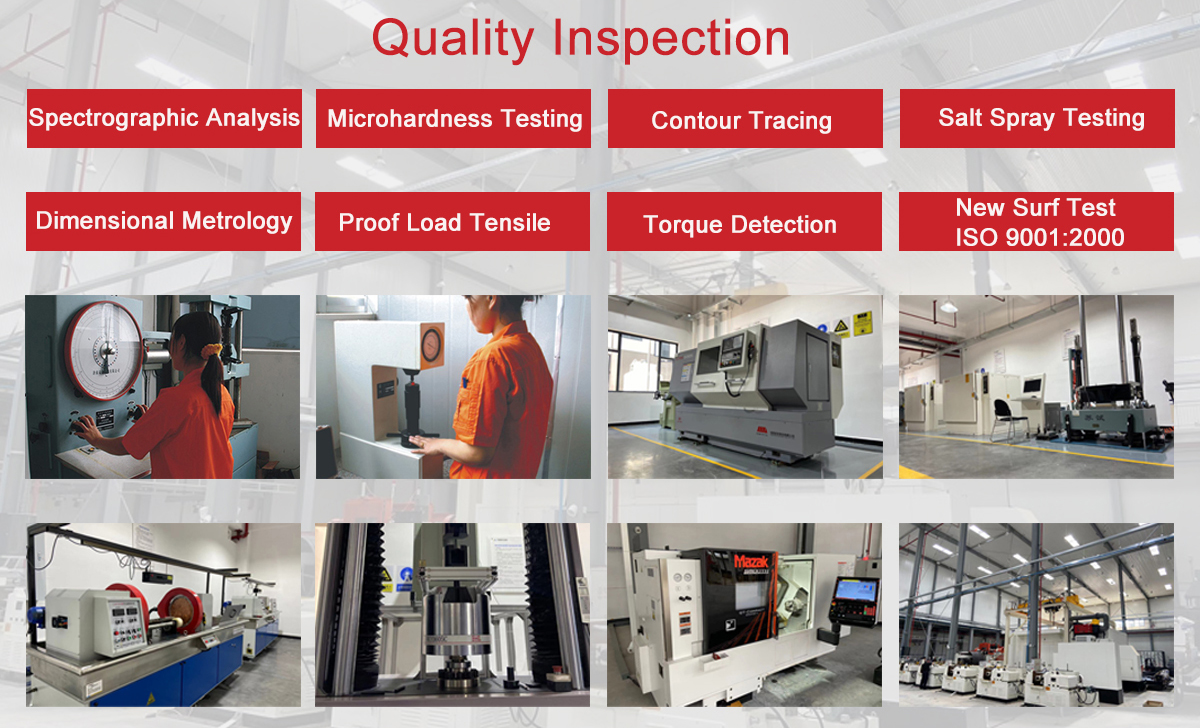
Quality Inspection
Why Choose Us as Your Self-Clinching Nuts Manufacturer
Experience
As a professional stainless steel press-fit nut manufacturer with over ten years of experience in the fastener industry, we are proficient in PEM® CLS/CLSS series product standards and manufacturing processes. From raw material selection to finished product shipment, the entire process undergoes rigorous testing—each batch undergoes dimensional accuracy, thread gauge testing, and salt spray testing. Our products are widely used in domestic chassis and cabinet applications, sheet metal processing, and communication equipment, and are exported to overseas markets, their quality having been proven over time.
Customization
We support custom-made non-standard stainless steel press-fit nuts. Customizable parameters include: thread specifications (beyond M2-M12), material (304 stainless steel/316 stainless steel/carbon steel, etc.), end code (for different plate thicknesses), and special surface treatments. We offer free sampling services, with a fast response time of 3-7 days based on drawings or samples. Flexible minimum order quantities, supporting small-batch trial production and large-volume purchases.
Scale
Our factory is equipped with multi-station cold heading machines, tapping machines, and automated production lines, and commonly used specifications are always in stock. Ample supply capacity and a direct-from-source production model make stainless steel press-fit nuts more transparent and competitively priced—eliminating middlemen and ensuring full quality control.
Service
We offer 24/7 online after-sales support to resolve your technical questions and unexpected needs anytime. Choosing us means choosing a trustworthy stainless steel press-fit nut supplier and a long-term partner.
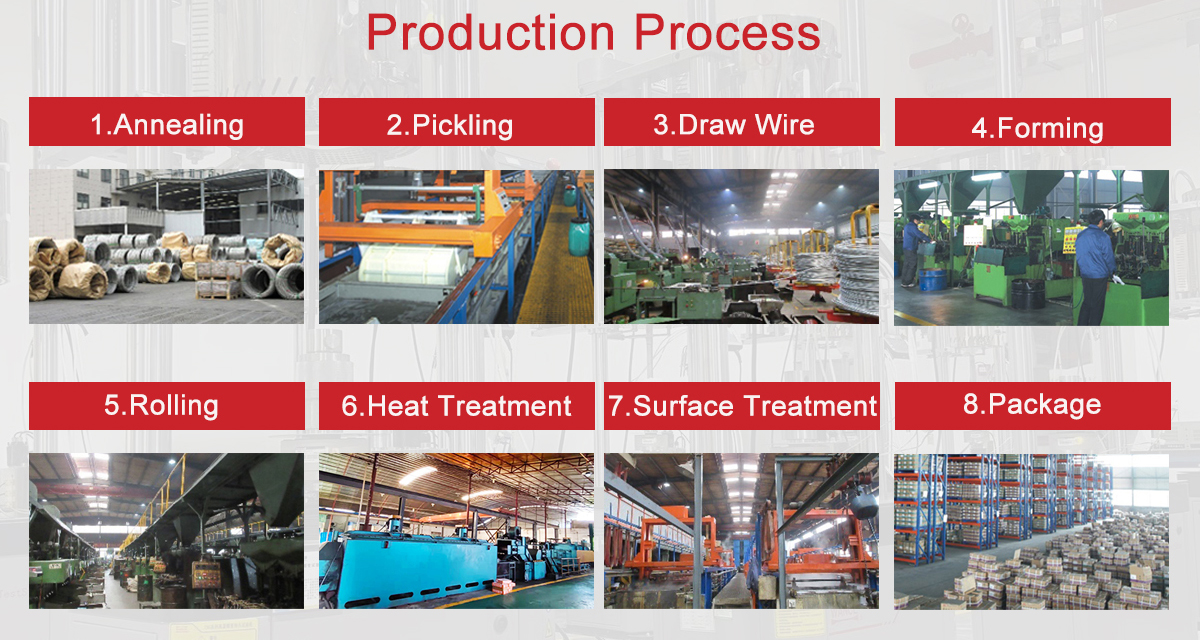
Production Process
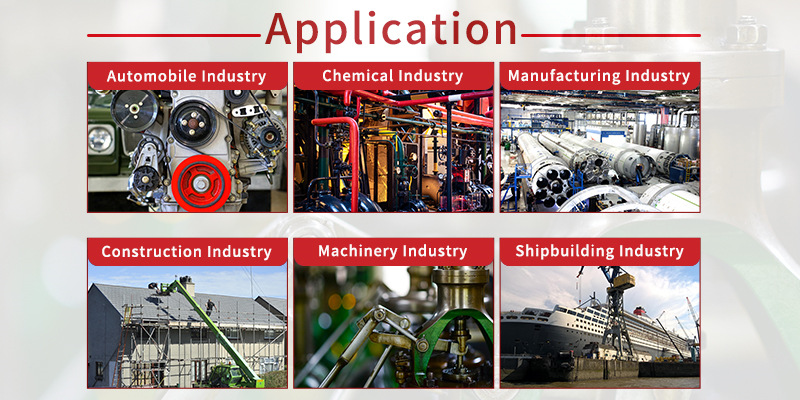
Application of Stainless Steel Self-Clinching Nuts
Chassis & Cabinet & Sheet Metal Fabrication
Stainless steel press-fit nuts are standard fasteners in the chassis, cabinet, and sheet metal fabrication industries. They provide robust internal threads on sheet metal parts such as server racks, distribution boxes, and control cabinets for mounting panels, rails, brackets, and other components. After installation, the back is flush, resulting in a neat and aesthetically pleasing appearance.
Electronics & Communication Equipment
Small and delicate stainless steel press-fit nuts are widely used in electronic equipment, communication equipment, and precision instruments. They provide reliable internal thread connections for thin-plate housings in products such as mobile phone base stations, routers, and testing instruments. Suitable for emerging fields such as 5G base stations and industrial control cabinets.
Automotive Manufacturing & Transportation
Used for fastening connections in automotive interiors, body sheet metal, and engine peripheral components. 304 stainless steel press-fit nuts are corrosion-resistant and vibration-resistant, ensuring reliable connections in complex road conditions.
New Energy & Power Equipment
Suitable for sheet metal connections in new energy battery packs, photovoltaic inverters, wind power control cabinets, and other power equipment. 316 stainless steel press-fit nuts have excellent corrosion resistance and are suitable for outdoor and high-humidity environments.
Application Diagram
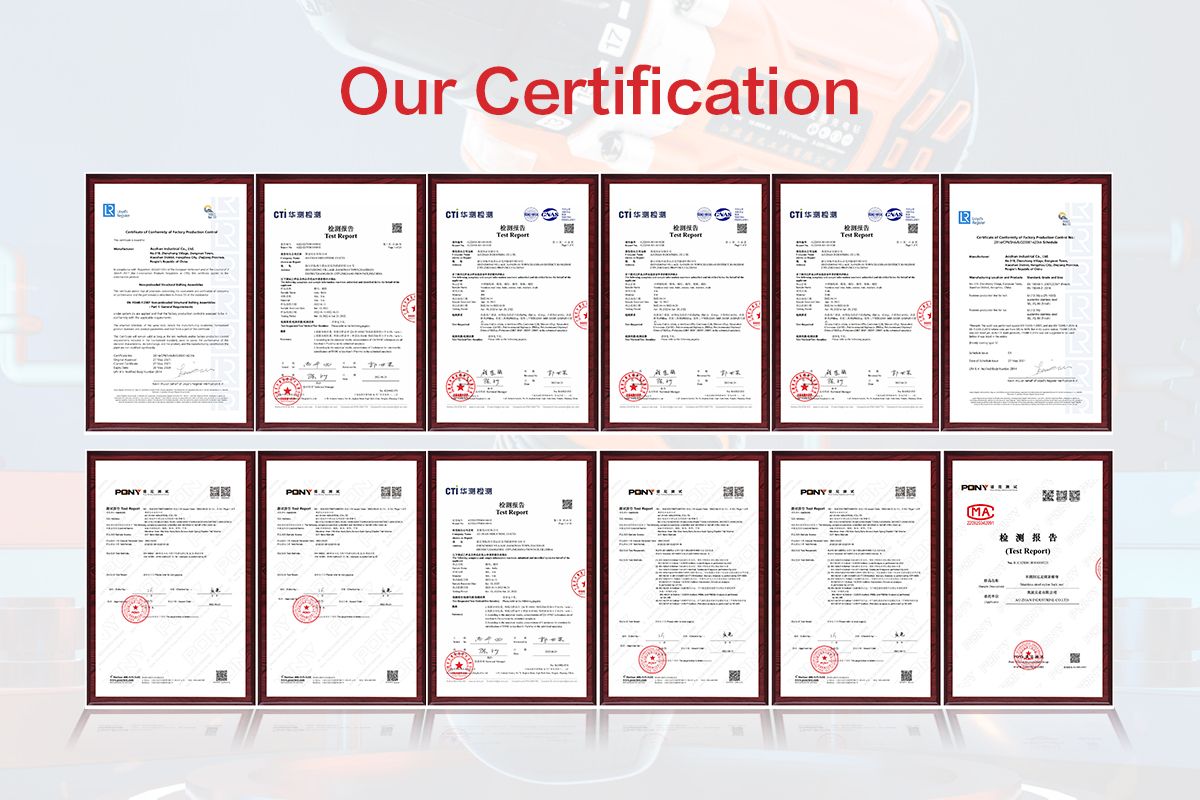
Our Certification
FAQ
Q1: What types of sheet metal are CLS stainless steel self-clinching nuts suitable for?
A: CLS stainless steel self-clinching nuts are recommended for steel or aluminum plates with a hardness of HRB 70 or below (HB 125 or below). Low-carbon steel plates must have a hardness less than 70RB, and stainless steel plates must have a hardness less than 80RB. If your sheet metal is stainless steel with a higher hardness (HRB 90 or below), we recommend using SP series (stainless iron) press-fit nuts. If you have any questions, please consult our professional technical team.
Q2: What do the suffix codes (0/1/2) on stainless steel self-clinching nuts represent?
A: The suffix codes represent the length of the nut shank, corresponding to different minimum sheet metal thicknesses. For example, with CLS-M3: suffix code 0 corresponds to a minimum sheet metal thickness of 0.8mm, code 1 corresponds to 1.0mm, and code 2 corresponds to 1.4mm. When selecting a model, you must choose the corresponding suffix code based on the actual sheet metal thickness to ensure sufficient engagement strength after press-fitting.
Q3: How to choose between 304 and 316 stainless steel self-clinching nuts?
A: 304 stainless steel (A2) contains 18% chromium and 8% nickel, offering good corrosion resistance. It is suitable for general indoor environments, electronic equipment, and general industrial applications, offering high cost-effectiveness. 316 stainless steel (A4) adds 2%-3% molybdenum to 304, significantly improving its resistance to chloride corrosion. It is particularly suitable for highly corrosive environments such as marine environments, chemical equipment, high salt spray conditions, and outdoor applications. CLS316 stainless steel self-clinching nuts are the standard model of 316 material press-fit nuts. It is recommended to choose based on the corrosion risk of the actual usage environment.
Q4: Do you support non-standard customization of stainless steel self-clinching nuts? What is the processing time?
A: Yes. As a professional supplier of stainless steel self-clinching nuts, we offer non-standard stainless steel self-clinching nut customization services. We can produce non-standard thread specifications, special materials, and irregular sizes according to drawings or samples. Standard products in commonly used specifications are readily available year-round and can be shipped the same day. Non-standard custom orders typically take 3-7 days to produce samples; the exact delivery time depends on the complexity of the process and the order quantity. Flexible minimum order quantities are available, supporting both small-batch trials and large-volume purchases. Please provide drawings to discuss and request a quote.